
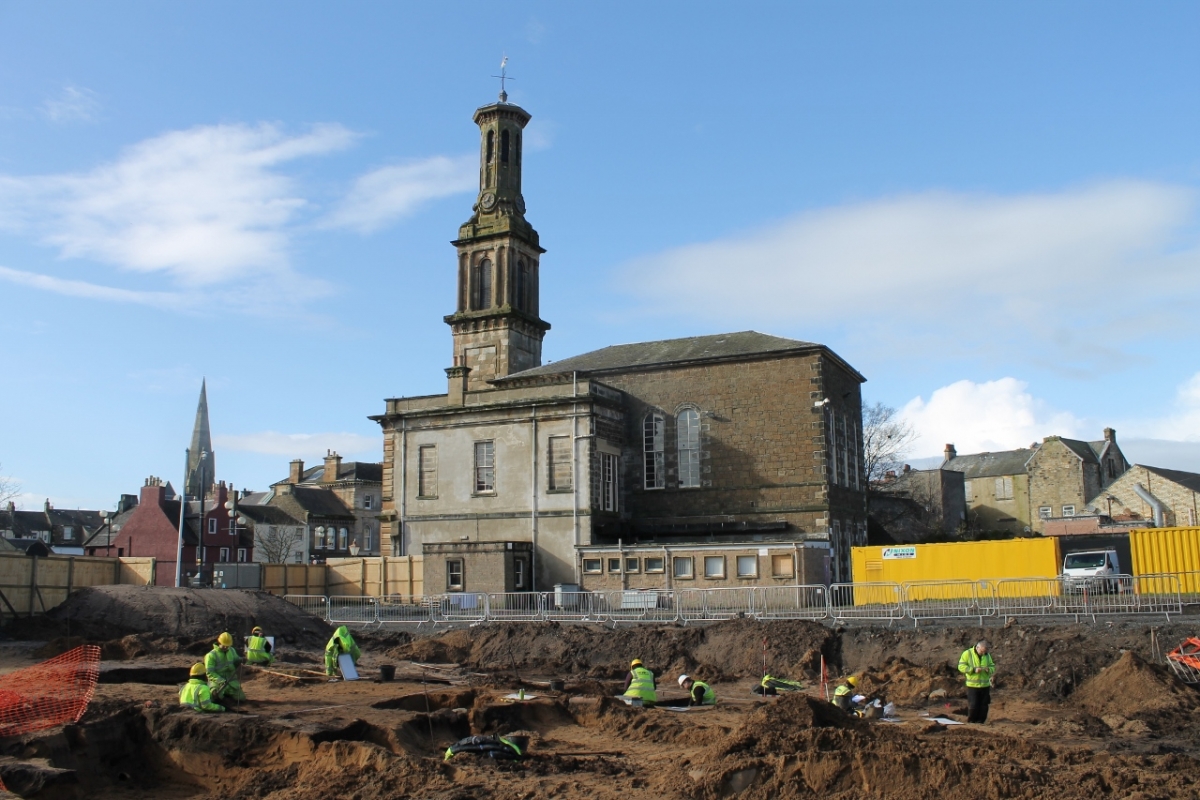
The site at the beginning of the excavation
Courtesy of Rathmell Archaeology
These different discoveries offer a unique insight into the daily life of past inhabitants.
The project started when the local authorities of Irvine, in North
Ayrshire, decided to build a large leisure centre on the site. They
contracted Rathmell Archaeology,
a commercial archaeology organisation, to conduct an archaeological
assessment of the grounds surrounding the 19th-century Town House, built
on the site of first official building – called a "tollbooth" – that
stood there in medieval times.Checking that the land does not hide valuable archaeological remains which could be damaged is an important step of any public construction project.
Here, the team
of archaeologists quickly discovered that the site contained a lot of
interesting artefacts, and that it was a crucial place to get a deeper
understanding of the medieval history of Irvine.
"We were given the
rare opportunity to explore the medieval past of the burgh. Of course,
there are a lot of writings which already provide historians with
valuable information. But archaeology enables us to really see how our
ancestors lived, and what it was like to be in Irvine at that time,"
Thomas Rees, director of Rathmell Archaeology, told IBTimes UK.
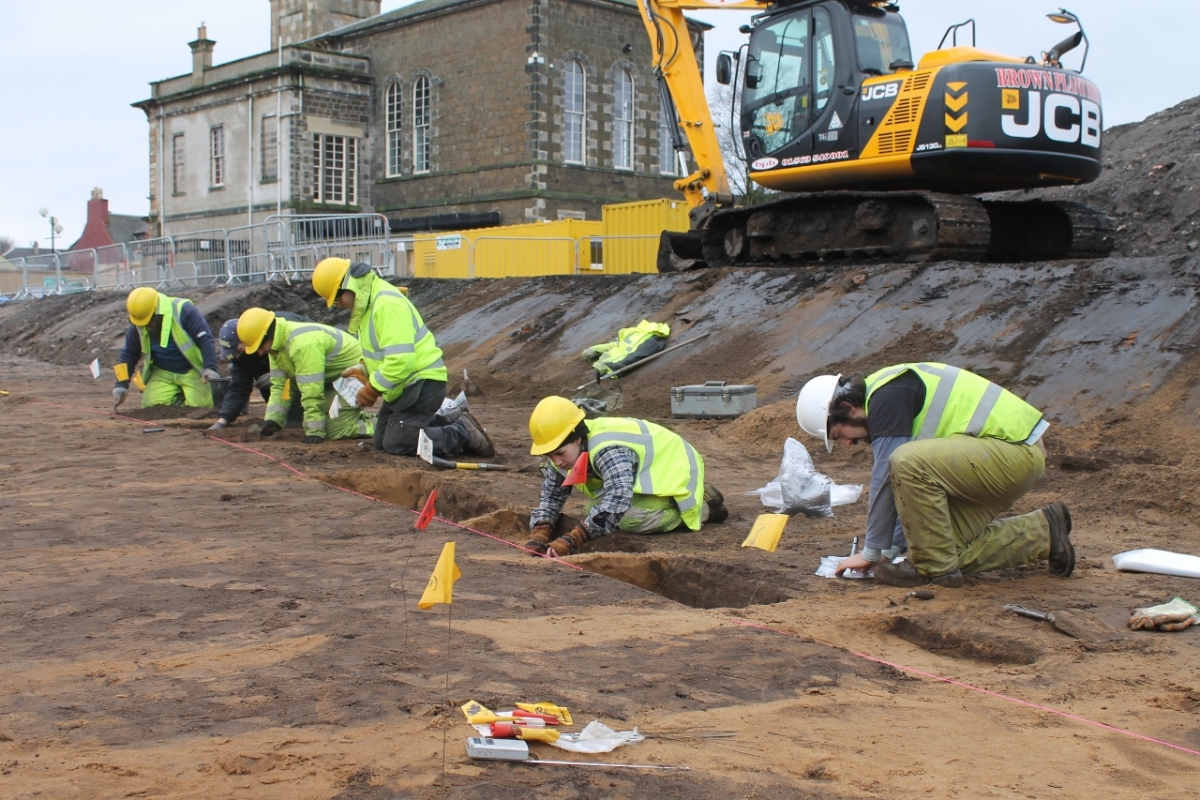
Archaeologists have been given a unique opportunity to discover relics from Irvine's medieval past
Courtesy of Rathmell Archaeology
Animal remains
Among the most unusual discoveries made on the site, the entire skeletons of the pony and the two cows particularly stand out. They were buried in individual graves at the back of one of the burgage plots. No apparent attempts were made to butcher the animals or use their bodies in any other ways, which is not common for the times.
"In those ages, when everything on the animal, from meat to skin and bones would have been valuable, putting the complete body to rest appears very unusual", Rees said.
An analysis of the bones will help the archaeologists determine the age, health, and size of the animal, providing clues as to why they were buried in such a deferential way.
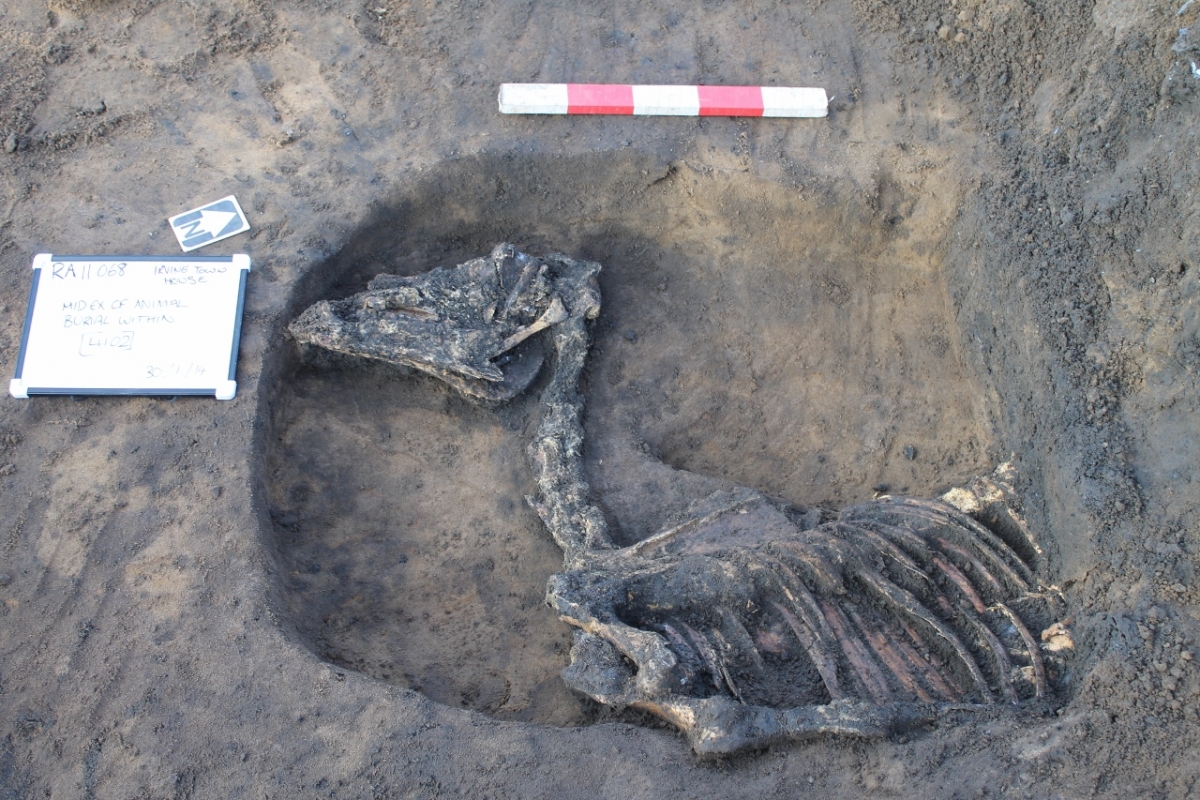
Remains of cattle and a pony were found buried in individual graves – an unusual practice
Courtesy of Rathmell Archaeology
Industrial past and economy
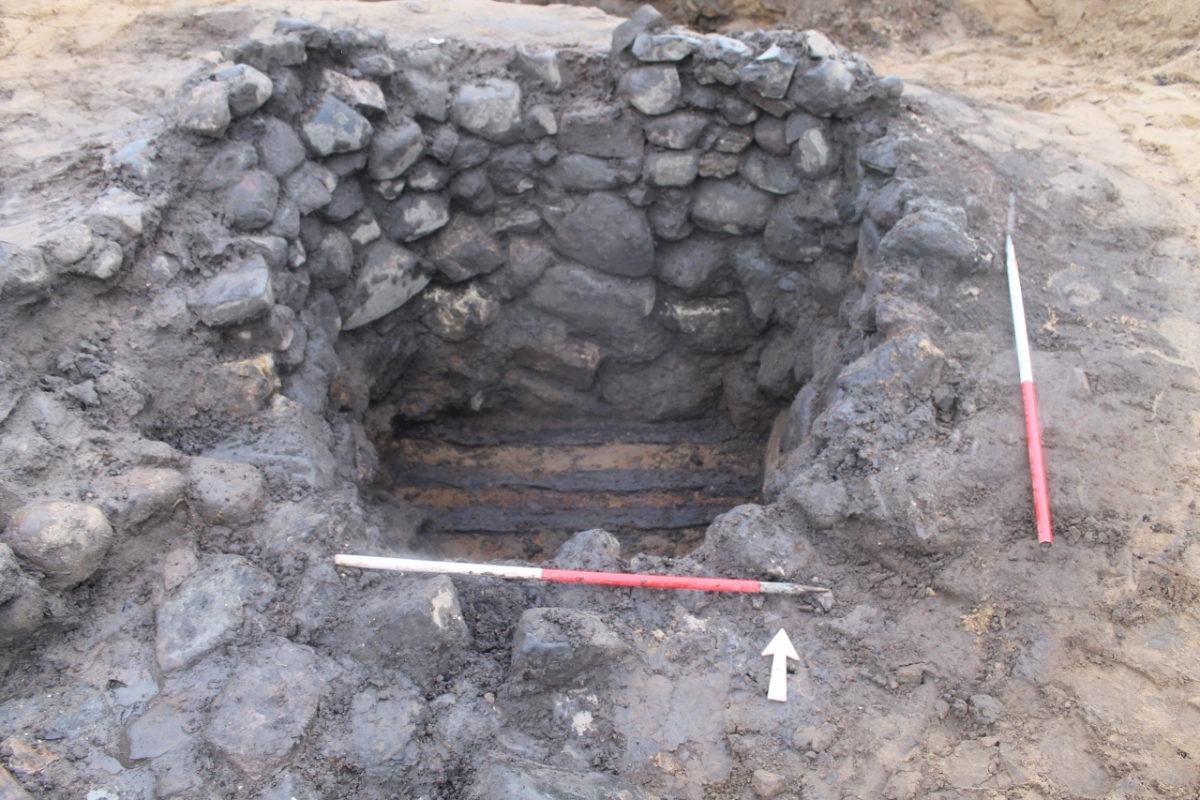
At the east of the site, the archaeologists also found traces of ancient industrial activity including matching pairs of tanked pits with timber and small wells. This suggests the past presence of a water-intensive industry, maybe a tannery where animal skins were processed.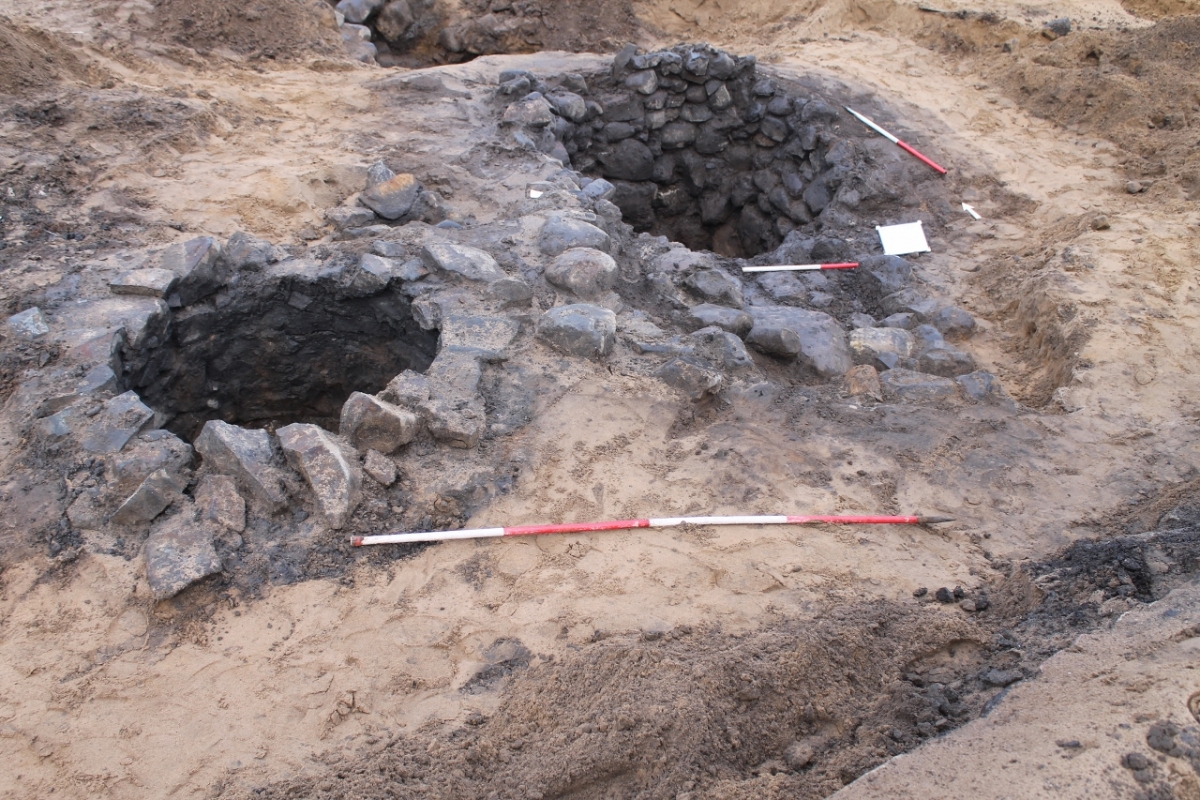
Pits and small well suggest a small industry operated there
Courtesy of Rathmell Archaeology
Courtesy of Rathmell Archaeology
"The set of potteries are a testimony of the international and local economy of the time," Rees explained.
"By
comparing them to potteries found in other parts of the region, and
establishing how dissimilar they are from each other, we get a good view
of the different social behaviours that existed between burghs, how
economic ties were made, and to what extent Irvine communicated with the
rest of the world".
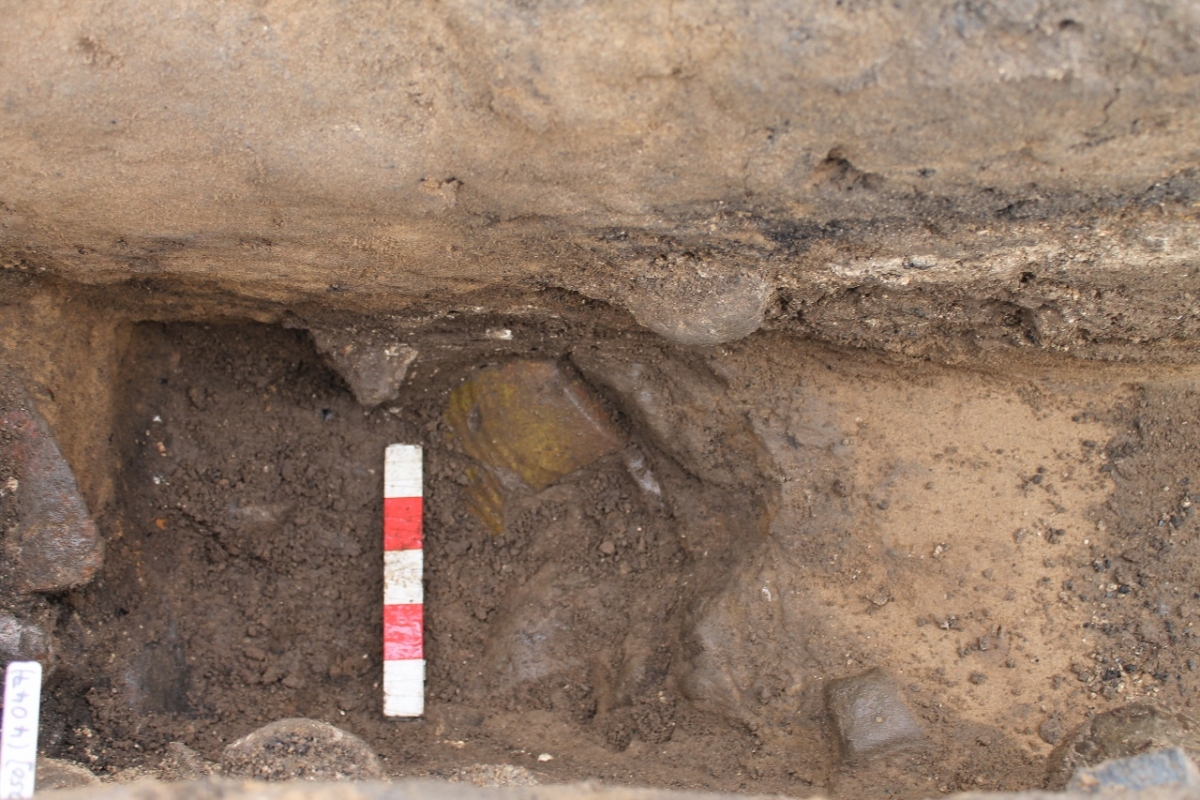
Potteries were also recovered, shedding light on the economy of the time
Courtesy of Rathmell Archaeology
Post a Comment