Articles by "Hacking News"

Security researchers used 2,500 pictures of a hand to create an exact model out of wax.

Biometric security has moved beyond just fingerprints and face recognition to vein-based authentication. Unfortunately, hackers have already figured out a way to crack that, too. According to Motherboard, security researchers at the Chaos Communication Congress hacking conference in Leipzig, Germany showed a model wax hand that they used to defeat a vein authentication system using a wax model hand.

Vein authentication typically uses a computer system to scan the shape, size and location of a person's veins in their hand. Those patterns have to be identified each time the system scans the person's hand. In order to fool that security check, the researchers took 2,500 photos of a hand using a modified SLR camera that had the infrared filter removed to better highlight veins under the skin. They then took those photos and created a wax hand with the details of the person's veins sculpted right in. That wax mock-up was enough to bypass the vein authentication system.

To be clear, the method used by the security researchers isn't one that the average person could easily replicate. While the researchers said photos from as far away as five meters (about 16 feet) are good enough, snapping enough to make a reliable model would be a challenge without lots of access to the hand in question. It's a more intensive cracking process than, say, fingerprint ID that could potentially be hacked simply by lifting a person's fingerprint from an object they have touched. It still presents a concern that security systems can be manipulated with cheap and readily available materials.
 

Join Geezgo for free. Use Geezgo's end-to-end encrypted Chat with your Closenets (friends, relatives, colleague etc) in personalized ways.>>

Cyrus Faravar
In a short letter filed Friday evening, US federal prosecutors wrote to a Brooklyn judge to say that they no longer needed Apple’s help in accessing the data on a seized iPhone 5S running iOS 7 associated with a drug case.
In the letter, United States Attorney Robert Capers wrote:
The government respectfully submits this letter to update the Court and the parties. Yesterday evening, an individual provided the passcode to the iPhone at issue in this case. Late last night, the government used that passcode by hand and gained access to the iPhone. Accordingly, the government no longer needs Apple’s assistance to unlock the iPhone, and withdraws its application.
This case pre-dates the debacle that played out earlier this year in San Bernardino, but relied on many of the same legal arguments. Here, in October 2015, the government asked the court to grant it an order that would have forced Apple to assist the unlocking of a phone belonging to Jun Feng, a man who eventually pleaded guilty to drug charges. Unlike the case in California however, Apple does have the ability to extract data on pre-iOS 8 devices with minimal difficulty. Feng has claimed that he forgot the passcode to this particular iPhone. According to the Wall Street Journal, it was Feng himself who recently supplied the passcode to investigators.
Regardless, in both cases, the government claimed that it had the authority to force Apple to help under the All Writs Act, an obscure late-18th-century law. In a February 2016 ruling in this New York case, US Magistrate Judge James Orenstein sided with Apple and concluded that what the government was asking for went too far. In his ruling, he worried about a "virtually limitless expansion of the government's legal authority to surreptitiously intrude on personal privacy."
The government said it would ask a more senior judge, known as a district judge, to weigh in. Last week, Apple responded, noting that it would continue to resist the government’s attempts to conscript its aid.
"The government has failed to show that it is has exhausted other potential repositories of the information it wants from Feng’s iPhone," Apple lawyer Theodore Boutrous wrote in the 55-page filing, which was very similar to the earlier filings in the San Bernardino case.
In a statement issued Friday night, Emily Pierce, a Department of Justice spokesman, reiterated the government’s claim that such cases "have never been about setting a court precedent."
"In this case, an individual provided the department with the passcode to the locked phone at issue in the Eastern District of New York," she wrote. "Because we now have access to the data we sought, we notified the court of this recent development and have withdrawn our request for assistance. This is an ongoing investigation and therefore we are not revealing the identity of the individual."
Apple spokesman Fred Sainz declined to comment.

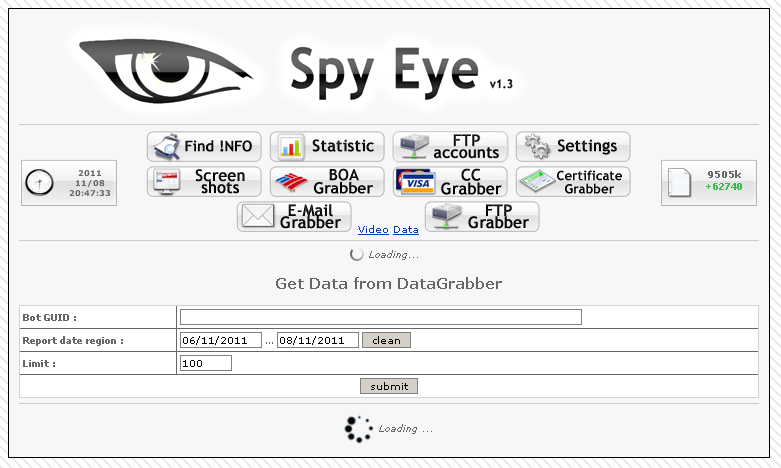
SpyEye infected more than 50 million PCs and caused almost $1 billion in losses.

Two men who built and sold a banking trojan that infected more than 50 million computers around the world and caused almost $1 billion in losses have been sentenced to a combined 24 years in prison.
Aleksandr Andreevich Panin, the chief developer and distributor of SpyEye, received a sentence of nine years and six months in federal prison, according to a statement issued by the US Department of Justice. In underground forums where the trojan was sold, the 27-year-old Russian national went by the hacker aliases “Gribodemon” and “Harderman.” In 2010, prosecutors said, he received the source code to a crimeware platform dubbed ZeuS. From 2009 to 2011, he conspired with others to develop SpyEye, which is believed to have borrowed liberally from ZeuS.
Prosecutors said Panin conspired with Hamza Bendelladj, aka Bx1, an Algerian man who received a 15-year prison term during the same Wednesday sentencing in federal court in Atlanta. Prosecutors said Bendelladj transmitted more than one million spam e-mails containing SpyEye and related malware to computers in the United States. The feat infected hundreds of thousands of computers. Bendelladj also developed SpyEye add ons that automated the theft of funds from victim bank accounts and further spread malware, including SpyEye and Zeus. Authorities said he stole personal information from almost 500,000 people and caused millions of dollars in losses to individuals and financial institutions around the world.
SpyEye sold for $500 to $10,000, depending on the features it included. Panin allowed customers to customize the software to choose from a list of available components. Options included methods for obtaining victims’ personal and financial information and data that helped target specific financial institutions, including banks and credit card companies. SpyEye was considered more user-friendly than other banking malware platforms. Bendelladj's arrest was also a contributing factor in last July's dismantling of Darkode.com, an online crime forum where SpyEye and other malware were sold. At least 60 people are suspected of carrying out hacking crimes in that operation.
“It is difficult to overstate the significance of this case, not only in terms of bringing two prolific computer hackers to justice, but also in disrupting and preventing immeasurable financial losses to individuals and the financial industry around the world,” John Horn, US Attorney for the Northern District of Georgia, said in the statement.
The takedown was the result of a collaboration between prosecutors and members of the security industry. According to a blog post from Trend Micro, company researchers infiltrated what was supposed to be a members-only crime forum to monitor the activities of Panin and Bendelladj. The researchers eventually uncovered posts that revealed information such as the criminals' e-mail addresses and ICQ and Jabber numbers and helped lead to the discovery of their actual identities. Also providing assistance were researchers from Microsoft’s Digital Crimes Unit, Flashpoint, PhishLabs, Dell SecureWorks, Damballa, and the Norwegian Security Research Team known as "Underworld.no."
The arrests came as both men brazenly traveled through places subject to US law-enforcement extradition. Bendelladj was arrested in early 2013 at Bangkok’s Suvarnabhumi Airport as he was on his way from Malaysia to Egypt. He was extradited in May of that year. Panin, whose country of origin has no extradition agreement with the US, was arrested two months later during a stopover at Hartsfield-Jackson International Airport in Atlanta.
Critics in security circles often complain that law enforcement authorities don't do enough to stop and deter online financial fraud despite how rampant it is. That may be true, but the arrest, conviction, and sentencing of Panin and Bendelladj are likely to severely limit the regions that international criminals feel comfortable visiting. And that counts for something.

Afrogalaxy

Contact Form

Name

Email *

Message *

Powered by Blogger.
Javascript DisablePlease Enable Javascript To See All Widget