Articles by "Breaking Point"

By Pavitra Dwibhashyam
Yosef Haim Ben David
Yosef Haim Ben-David has been handed life sentence and prison for 20 years for killing Palestinian teenager Mohammed Abu KhdeirPhoto Credit: AHMAD GHARABLI/AFP/Getty Images
A court in Jerusalem has given life sentence to a Jewish gang leader, Yosef Haim Ben-David, for killing a Palestinian teenager named Mohammed Abu Khdeir in 2014. He was also ordered by the court to pay 150,000 shekels (£26,863). In February, two young members of the gang were given life sentences along with 20 years in prison.
The father of the boy, Hussein Abu Khdeir, told AFP: "Whatever they decide, our wounds will not heal; the boy will not come back."
In November 2015, Ben-David's lawyers submitted a last minute petition to delay his sentence on grounds of insanity. He pleaded in court saying: "I am sorry for the family. This is not me. I wasn't in control." The court ruled he was fit to stand trial after psychological test results were received.
State prosecutor Uri Korb asked for life sentence for killing Abu Khdeir, 20 years for kidnapping and another 15 years for other charges, which include attempt to kidnap a child. "This is an evil and cruel man who does not represent our civilised society," he said.
After the court verdict was read, members of Abu Khdeir's family cursed Ben-David as he was taken from the court, the Guardian reported.
Two hours after the verdict, a Palestinian ran a car into three Israeli soldiers in the occupied West Bank injuring three, out of whom one is gravely injured.
The teenager was kidnapped from the occupied East Jerusalem on 2 July, 2014 and his charred body was later found by police in a Jerusalem forest. His autopsy results suggested that he was beaten and burnt alive.
According to media reports, this was a revenge attack for the murders of three Israeli teenagers Naftali Frenkel, Gilad Shaer and Eyal Yifrach. The incidents contributed to the Israel-Gaza conflict of 2014 which went on for 51 days.

Afire2
Students from Fort McMurray Composite High School are released early as a wildfire burns nearby in Fort McMurray, Alberta, May 3, 2016. Photo: Kangen Lee/Handout via Reuters
Alberta is racing to evacuate thousands of people as an uncontrolled wildfire burns near Fort McMurray, in the heart of Canada's oil sands region, forcing residents to flee north to safety on Tuesday.
Alberta appealed for help from other provinces and Ottawa to help fight the fire and airlift people from the city. Local authorities issued a mandatory evacuation order for all of Fort McMurray, which affects the city's 80,000 residents.
The 6,540-acre fire, which was discovered on May 1, has closed off the main southern exit from the city, prompting residents to head north towards the oil sands camps.
"This is the biggest evacuation we have seen in the history of the province in terms of fire," Alberta Premier Rachel Notley said at a news conference.
"We need to find more camps, we have secured spaces for about 6,000 people, we know we need to find more and that work is underway," Notley said.
Suncor Energy said evacuees were welcome at its Firebag oil sands facility, while Canadian Natural Resources Ltd. said it was working to ensure any affected CNRL workers and their families could use its camps.
Notley said there were no injuries or casualties in the fire, adding that oil sands operations were also unaffected.
A number of flights from Fort McMurray airport were cancelled and the airport advised passengers to check with their airlines for updates.
The blaze, which started southwest of Fort McMurray, spread rapidly on Tuesday to the outskirts of the city, forcing the evacuation of the downtown area and almost every community in the lower town on the banks of the Clearwater and Athabasca rivers.
"There's lots of smoke, its quite bad and hanging over the city. Where there are trees in the distance you can see the fire," Fort McMurray resident Nick Sanders told Reuters as he was packing up to leave downtown.
Earlier, TV footage and photographs on Twitter showed flames and smoke billowing over the city and traffic heading north on the highway to safety, while CTV News reported a trailer park had been destroyed.
"My thoughts are with people affected by the fire in Fort McMurray tonight. Stay safe and remember to follow evacuation orders," Canadian Prime Minister Justin Trudeau tweeted.
By late afternoon, the fire had blocked off one major route out of town, closing Highway 63 south of downtown.
Some residents were evacuated to Noralta Lodge, an oil sands camp 21 kilometres (13 miles) north of Fort McMurray.
"Tomorrow is expected to be a more intense burning day than today is," said Bruce Mayer, assistant deputy minister of Alberta's Forestry Division.
Mayer said that nine air tankers, more than a dozen helicopters and more than 100 firefighters were battling the fire.
Earlier on Tuesday authorities said the wildfire jumped the Athabasca river and breached Highway 63, the main artery south from the isolated city, which is located around 430 km (267 miles) northeast of Alberta's capital, Edmonton.
Authorities are now expecting a cold front to reach Fort McMurray by Wednesday afternoon, bringing increased winds that will make tomorrow a more difficult fire-fighting day than today.
After a mild winter with lower-than-average snowfall and a warm spring, Alberta is much drier than normal for this time of year, raising the prospect of a long and expensive wildfire season.
Most oil sands facilities are to the north and east of the city, with the closest being Suncor Energy's base plant roughly 30 km (17 miles) away. A Suncor spokesman said there were no current impacts on operations.
Will Gibson, a spokesman for the Syncrude project, which has its facility around 40 km (25 miles) north of the city, said operations were unaffected.
A spokesman for pipeline company Enbridge Inc., which has crude and condensate pipelines in the region, said the company was monitoring the situation but there were no impacts so far.
This is the second major fire around the city in less than a year. Last May, wildfires in the area led to the evacuation of hundreds of workers from Canada's energy heartland, leading to a 9 percent cut in Alberta's oil sands output at the time. The evacuations last year led to shutdowns by Cenovus Energy and Canadian Natural Resources Ltd. at some of their projects.

By Pavitra Dwibhashyam
Yosef Haim Ben David
Yosef Haim Ben-David has been handed life sentence and prison for 20 years for killing Palestinian teenager Mohammed Abu KhdeirPhoto Credit: AHMAD GHARABLI/AFP/Getty Images
A court in Jerusalem has given life sentence to a Jewish gang leader, Yosef Haim Ben-David, for killing a Palestinian teenager named Mohammed Abu Khdeir in 2014. He was also ordered by the court to pay 150,000 shekels (£26,863). In February, two young members of the gang were given life sentences along with 20 years in prison.
The father of the boy, Hussein Abu Khdeir, told AFP: "Whatever they decide, our wounds will not heal; the boy will not come back."
In November 2015, Ben-David's lawyers submitted a last minute petition to delay his sentence on grounds of insanity. He pleaded in court saying: "I am sorry for the family. This is not me. I wasn't in control." The court ruled he was fit to stand trial after psychological test results were received.
State prosecutor Uri Korb asked for life sentence for killing Abu Khdeir, 20 years for kidnapping and another 15 years for other charges, which include attempt to kidnap a child. "This is an evil and cruel man who does not represent our civilised society," he said.
After the court verdict was read, members of Abu Khdeir's family cursed Ben-David as he was taken from the court, the Guardian reported.
Two hours after the verdict, a Palestinian ran a car into three Israeli soldiers in the occupied West Bank injuring three, out of whom one is gravely injured.
The teenager was kidnapped from the occupied East Jerusalem on 2 July, 2014 and his charred body was later found by police in a Jerusalem forest. His autopsy results suggested that he was beaten and burnt alive.
According to media reports, this was a revenge attack for the murders of three Israeli teenagers Naftali Frenkel, Gilad Shaer and Eyal Yifrach. The incidents contributed to the Israel-Gaza conflict of 2014 which went on for 51 days.

Kukil Bora
RTX2CLM4
Kurdish Peshmerga fighters observe the front line with Islamic State, in Gwar, northern Iraq, Sept. 23, 2014. Photo: REUTERS/Ahmed Jadallah/File Photo
An American serviceman was killed near Irbil in northern Iraq during an attack by Islamic State group fighters, U.S. Defense Secretary Ash Carter said Tuesday. He was killed while aiding Kurdish fighters in the region. 
Carter didn’t provide further details, other than telling reporters that it was “a combat death” and that the soldier died “in the neighborhood of Irbil,” the Associated Press (AP) reported.
“A Coalition service member was killed in northern Iraq as a result of enemy fire,” the U.S. Central Command (CENTCOM) said in a statement, without disclosing the serviceman’s name and rank complying with military protocol. “Further information will be released as appropriate.”
The AP report also cited a U.S. military official saying that the serviceman was killed while he was on a train-and-assist mission, advising Kurdish Peshmerga troops, who are U.S. allies in the fight against the Islamic State group, also known as ISIS. The military official said that the serviceman was hit by “direct fire” after ISIS militants infiltrated Peshmerga’s forward line.
Tuesday’s attacks in the nearby city of Mosul were said to be the largest against Kurdish forces in recent months by ISIS militants, who have been losing ground in the north and west of Iraq, Reuters reported.
“The enemy penetrated the Kurdish lines,” the Wall Street Journal quoted Col. Steve Warren, spokesman for Operation Inherent Resolve, the U.S.-led coalition fighting ISIS, as saying. “They went about five kilometers past the forward line of troops with some truck bombs.”
The serviceman is the third American soldier killed in Iraq since U.S. troops pulled out from the Middle Eastern country in 2011 after a nearly decade-long occupation, the journal reported.

By William Watkinson
A 16-year-old girl was flung to her death from a fairground ride after complaining to staff that her seatbelt would not buckle up, it has been claimed. The girl, named locally as Samantha Aguilar, was catapulted from the ride in El Paso, Texas, during Dia de Los Niños - a traditional Mexican holiday that celebrates children.
Aguilar was riding an attraction known as "The Sizzler" with two other friends – only one of them managed to stay seated. A 15-year-old friend was also allegedly thrown from the ride and is understood to have suffered only minor injuries and is expected to make a full recovery at a local hospital.
An unnamed aunt of a third girl claimed Aguilar was "clinging on to her belt for dear life" and despite raising concerns with the ride operator they were allegedly told they "would be fine without" a working seatbelt. She added that she believed the attraction was built for two riders.
Sgt. Enrique Carillo from the El Paso Police Department said an investigation would take place into the incident, which happened on Friday 29 April. "We don't know the cause", he told the Corpus Christi Caller Times.
Aguilar was a student athlete at Hanks High School and her coach Kim Gomez said: "Online tributes from fellow students called for school members to wear the colour red to Hanks today in Aguilar's memory.
Bishop Mark J. Seitz, of the El Paso Catholic Diocese, said he is saddened by the tragedy. "Parish communities gather at times outside of church services, religious formation classes and other activities simply to enjoy one another and their families," Seitz said.
The Sizzler
Police taped of the scene Friday 29 April in El PasoKFOXTV
"When such a joyful event turns tragic the pain of the loss is even greater. The Diocese of El Paso deeply regrets this terrible loss. Words are incapable of expressing our sorrow at the death of this young girl.
"We know that no words will alleviate her family's pain but we will ask our merciful God to do through prayer what words are incapable of doing: bringing consolation in the midst of this sorrow."

Mary Papenfuss
China: Too many men, not enough women. Men snap pictures of a dancer performing at a car show in Tianjin, China. Some Chinese men turn to child brides from Vietnam because they're the only wives they can find and afford
Reuters/Stringer
Hundreds of child brides, some as young as 13, are being trafficked from Vietnam to marry Chinese men who can't find wives because of China's gender imbalance.
China's one-child policy combined with the long-standing preference for sons has heavily skewed the nation's gender ratio. By 2020, the National State Population and Family Planning Commission projects that males of marrying age in China will outnumber females by at least 30 million.
Now the villages along the Vietnamese-Chinese border have become a hunting ground for human traffickers to provide wives to single men. Girls are tricked or drugged, then sneaked across the border by boat, motorbike or car, reports CNN.
"It costs a very huge amount of money" for a Chinese man to marry a local woman in part because a number of men are competing for her hand in marriage, said Ha Thi Van Khanh, national project coordinator for the United Nation's anti-trafficking organization in Vietnam.
Traditionally, Chinese men wishing to marry local women are expected to pay for an elaborate banquet and to have purchased a new home, so "this is why they try to import women from neighboring countries, including Vietnam," she said.
Vietnamese brides can sell for $3,000 (£2,040). They're considered particularly desirable because of their cultural similarities to the Chinese.
In one case tracked by CNN reporters, a 16-year-old girl was drugged and smuggled into China, where she was pressured to marry. When she refused she was beaten and starved until she relented.
She said her husband was kind to her, but she never stopped missing her family. "My desire to go home was indescribable," said the girl, Nguyen. "I agreed to marry the man but I could not stay with a stranger without any feelings for him."
When her mother-in-law realized she was never going to warm to the marriage, the family returned her to the traffickers. They got their money back, and Nguyen she was forced into a second marriage. She finally fled back home but had to leave her child behind.
Chinese and Vietnamese officials are working together to help stem the trafficking problem, and some organisations like the Pacific Links Foundation run a shelter for trafficking victims in Vietnam.
Pacific Links takes victims each week to a market in northern Vietnam where they talk about their experiences to people there.
"I think awareness is the only tool," to end trafficking, said organisation founder Diep Vuong.


Former San Francisco 49er Dana Stubblefield signs autographs for Japanese football fans in Osaka, Aug. 2, 2002.
Photo: REUTERS/Eriko Sugita
Former San Francisco 49er Dana Stubblefield was charged Monday with multiple counts of rape of a "developmentally delayed" woman. The retired NFL player’s lawyer reportedly said that Stubblefield had consensual sex with the woman who accused him of rape.
Stubblefield reportedly attacked the 31-year-old woman at his Morgan Hill home on April 9, 2015. The 43-year-old contacted the woman through a nanny agency, San Jose Mercury News reported citing police.
“This was a crime of violence against a vulnerable victim,” Santa Clara County Deputy District Attorney Tim McInerny, said in a statement. “She was looking for a job and she was unconscionably assaulted.”
Stubblefield faces charges of rape by force or violence, rape of a person incapable of giving consent, oral copulation by force or violence, oral copulation of a person incapable of giving consent and false imprisonment. If convicted, the 45-year-old could face up to 16 years and eight months in prison.
Stubblefield is being held on a $250,000 bail and the date of his arraignment at the South County Courthouse in Morgan Hill will be set within 24 hours, the district attorney's office said.
However, Stubblefield's attorney, Ken Rosenfeld, disputed the allegations made by the prosecutors.
"Dana Stubblefield is being unfairly targeted due to his celebrity and wealth by someone with full motivation to lie," Rosenfeld said in a statement. "Mr. Stubblefield passed a lie detector test with flying colors and will present a full, vigorous defense against these allegations."

Mary Papenfuss
'To call this horrific would be an understatement,' said a sheriff's spokesman.
Flickr/Caroline
A Texas mother charged with felony abuse after authorities found two sobbing toddlers injured and chained in her backyard is pregnant with her seventh child, according to local officials.
Porucha Phillips, 34, has been charged with two counts of felony abuse and is being held in the Bexar County jail in lieu of $150,00 bail, reports the
San Antonio Express-News. Her husband has not been charged. Investigators determined he was working when the toddlers — and Phillips' own six children — were found alone at their San Antonio house. He is cooperating with the investigation.
The horrific tale unfolded when neighbors called police after hearing young children crying for several hours at Phillip's home, said Bexar County officials.
Police arrived after midnight the morning of 29 April to find a sobbing two-year-old boy chained to the ground and a whimpering three-year-old girl tied to a door with a dog leash.
The little boy was "chained as if he was a dog," sheriff's spokesman James Keith told local CNN affiliate KSAT-TV. "There was no slack in the chain. His pants were down. You could tell he'd been here for a while. And then a short distance away, a 3-year-old girl who was tied to a door with a dog leash was just exhausted."
The girl had a broken arm. She was rushed to intensive care at a nearby hospital.
Phillips' own six children, ages 10 month to 13 years, were found inside the house in conditions "as bad as it gets," said one investigator.
There were no adults on the scene.
Keith called the situation "sickening," adding: "To call this horrific would be an understatement."
He said the mother of the two sibling toddlers was located in California and was cooperating with the investigation. Officials were still attempting to determine the extent of her involvement. Investigators believe Phillips was supposed to be in charge of caring for the two children.
"The biggest question now is what she [their mother] is doing in California and why are her kids here," Keith said.
All eight children were taken from the home by the local child welfare department.
Keith said he was grateful a neighbor called the sheriff's office. He encouraged anybody who ever suspects child abuse to do the same.
"We are grateful that this person was brave enough to call us and that our deputies were able to respond when they did," he said. "I don't even want to think about how this could have happened, how this could have played out, had our deputies not gotten there when they did."

A Chicago woman has sued Starbucks Corp in federal court, claiming the world's largest coffee chain puts too much ice in chilled drinks, and is seeking US$5 million.

CHICAGO: A Chicago woman has sued Starbucks Corp in federal court, claiming the world's largest coffee chain puts too much ice in chilled drinks, and is seeking US$5 million.
Filed in U.S. District Court in Chicago last week by Stacy Pincus, the lawsuit said Starbucks iced coffee and iced tea drinks contain less than the advertised amount of beverage.
Lawyers have applied for class status for the lawsuit, which alleges that an iced drink touted as containing 24 ounces actually has only about 14 ounces of fluid.
"Starbucks' advertising practices are clearly meant to mislead consumers when combined with the standard practice of filling a cold drink cup with far less liquid than the cup can hold," the lawsuit charged. "If Starbucks truly intended to provide the amount of fluid ounces in its Cold Drinks that it advertises, there would be simple ways to do so."
Starbucks called the lawsuit "without merit" in an emailed statement to Reuters.
"Our customers understand and expect that ice is an essential component of any 'iced' beverage," a spokeswoman for the Seattle-based company said. "If a customer is not satisfied with their beverage preparation, we will gladly remake it."
(Reporting by Justin Madden; Edited by Matthew Lewis)

Ananya Roy
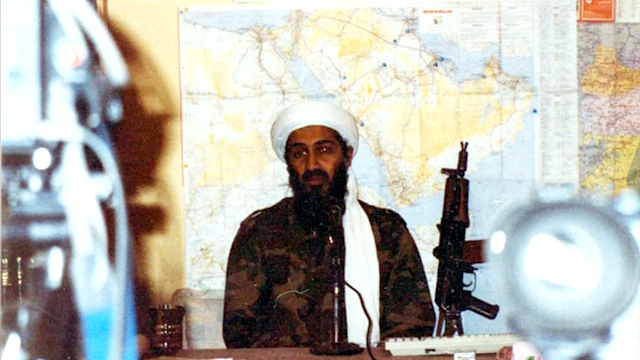
Mecca-based construction firm Saudi Binladin Group, founded by Osama bin Laden, has laid off 50,000 foreign workers.
Camera Eye/Flickr
A construction firm founded by Osama bin Laden's father has laid off around 50,000 foreign workers. The workers torched several company buses to protest against the layoffs and non-payment of wages. Foreign workers account for a quarter of the workforce of the Mecca-based Saudi Binladin Group, which reportedly lost business because of public spending cuts triggered by low oil prices.
According to Saudi media reports, the group did not pay its workers for the past eight months. To add to the woes, the foreign workers were reportedly given exit visas and told to leave the country, The Times reported.
The angry workers staged protests outside the company's office in Mecca and gutted nine company buses, claiming they have not been given wages for the past six months, The Independent reported.
Major Nayef al-Sharif, spokesperson for Mecca's Civil Defense, was cited as saying that firefighters had put out the blaze and that no one was injured in the incident.
According to The Times, the Binladin Group made significant gains from Saudi Arabia's oil boom and Laden's father's links to the royal family helped the group win government contracts. The group was reportedly hired to build flagship infrastructure projects in the kingdom, including expanding the holy cities of Mecca and Medina.
However, the group was hit hard when King Salman barred the company from taking on new public contracts after its crane collapsed at a construction site in Mecca, killing more than 100 people.
The Binladin Group once prospered from Saudi oil boom and Osama bin Laden's father's royal links
Courtesy of Abdel Bari Atwan
The cash-stricken Saudi government reportedly failed to pay the construction company for several projects, pushing the group into debts totalling $29bn (£20bn). The group also faced many lawsuits filed by relatives of the victims of the 9/11 attacks perpetrated by Laden. The claims were, however, dismissed because Laden had no links with the company's operations.
Once a cash-rich kingdom owing to its flourishing oil business, Saudi Arabia is now looking to limit its economic dependence on oil after falling oil prices have left a huge hole in the country's finances. The Saudi Prince was reported to have announced a major economic overhaul to minimise the kingdom's dependence on oil.
In March, the government reportedly took out a foreign loan for the first time since the Gulf War in 1991. The government also cut public spending in 2015 to counter a £69bn budget deficit.

Pavitra Dwibhashyam
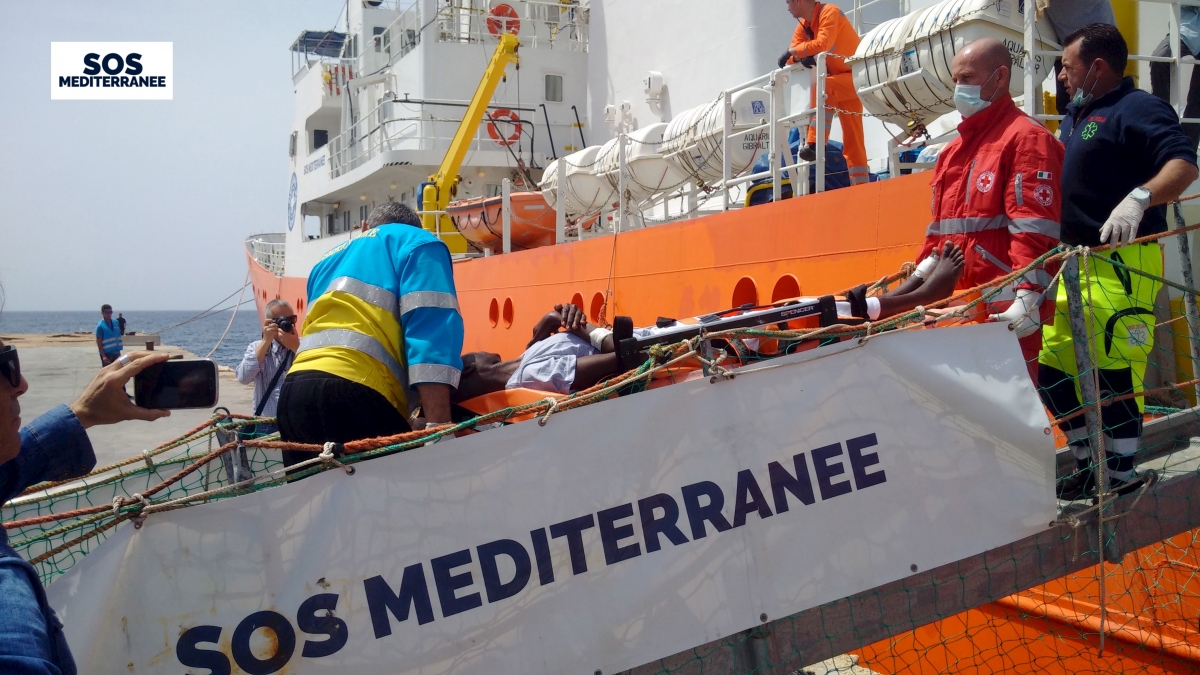
The two shipwrecks on 29 April come on the heels of a similar incident last week in which around 500 people reportedly drowned - Representational image
Reuters
Around 99 people have reportedly drowned off the coast of Libya in two separate shipwrecks on 29 April. A newborn baby was among the victims, survivors claimed. On Friday, 26 migrants were rescued by an Italian cargo ship as the rubber dinghy they were travelling in, sank off the Mediterranean coast, soon after leaving Sabratha in Libya.
The Italian coast guard responded to a satellite distress call and took the migrants from the merchant vessel to Lampedusa, the southern-most island of Italy, according to the International Organisation for Migration (IOM), the Guardian reported.
The spokesperson for IOM Italy, Flavio De Giacomo said: "The dinghy was taking on water, in very bad conditions. Many people had already fallen in the sea and drowned. They were all very shocked."
The rescued refugees will be provided with psychological help in Lampedusa. The UNHCR claimed that one rubber dinghy broke into two after taking on water and 26 people were rescued. It was not confirmed how many people were aboard the boat when it capsized.
Meanwhile, those who survived the second shipwreck were taken to the Sicilian Port of Pozzallo on Sunday. Around 105 people were rescued of which eight people were taken to the hospital with serious health issues. Two bodies were also fished out by coast guards.
The two shipwrecks come on the heels of a similar incident last week where around 500 people were believed to have drowned. The Italy-Libya route has been overshadowed by the Turkey-Greece route through which thousands of Syrian migrants have been making their way to Europe.
The Italy-Libya sea route has previously been used mostly from North African countries such as Eritrea, Nigeria and Somalia to reach European shores, where as Syrian migrants are predominantly taking the Turkey-Greece route to flee the war-ravaged country.
A controversial EU-Turkey deal has been made to stop refugees from making the perilous journey, however, there is speculation that the number of migrants making their way to Italy could increase exponentially.
Since the refugee crisis began unfolding in 2014, at least one million people have crossed into Europe, according to data released by IOM and UNHCR. A majority of the refugees (800,000) came via sea to Greece and 150,000 of them to Italy. As of April 2016, 180,245 refugees had arrived in Greece and Italy via sea. Since the EU-Turkey deal has been signed, the number of daily arrivals to Greek shores declined. Syrian, Afghan and Iraqi nationals form the largest share of migrants arriving in Europe.

Lara Rebello

The mother succumbed to the 70% burns she sustained (photo for representational purpose only)
Mark Kolbe/Getty Images
Given that it is not an easy task to find a life partner, but a man in the southern Indian state of Tamil Nadu, set his mother on fire because she was incapable of finding him a girl to marry. Local police claimed that a taxi driver, identified as D Amarnath Prasad, from the coastal city of Chennai, tied his 60-year-old mother Sasikala to a chair before immolating her for not getting him a bride.


Neighbours told investigators that on 30 April, the 40-year-old man returned home in an inebriated condition and started fighting with his mother. He reportedly did not take rejection very well and was hurling abuses at his physically challenged mother. Later that night, neighbours in the village of Arumbakkam – where the incident happened – heard the woman screaming at 5.30am local time (12am GMT) and rushed to the house.
"Sasikala lived with her son Prasad and her younger sister, a spinster," an officer told the Times of India. "Neighbours said they heard Prasad shouting at his mother on Saturday night." Sasikala was allegedly found tied to a plastic chair with severe burns and was immediately rushed to the hospital.
A source at the Kilpauk Medical College and Hospital – where she was admitted – reported that the woman had sustained 70% burns and succumbed to her injuries on 1 May.
Prior to her death, she gave her statement to the police and implicated her son Prasad, who was subsequently arrested.

India Ashok
Alex Lowe and David Bridges were found 16 years after their disappearance, frozen in time
Alex Lowe Charitable Foundation
The remains of acclaimed mountain climbers Alex Lowe and David Bridges have been discovered 16 years after their disappearance in the Himalayan mountains. The duo were buried alive in an avalanche in Tibet's Shishapangma in October 1999. Their fellow companion and third climber of the party, Conrad Anker, sustained injuries but was able to escape to safety.
Lowe and Bridges' bodies were found by David Goettler and Ueli Steck, German and Swiss alpinists respectively, on 27 April, according to Outside magazine. The duo discovered the climbers' remains "still encased in blue ice" within a melting glazier. Goettler and Steck described the clothing and backpacks that were found on the remains to Anker, who then identified them as Lowe and Bridges.
Lowe's widow Jennifer, who married Anker in 2001, said in a statement: "Alex and David vanished, were captured and frozen in time. Sixteen years of life has been lived and now they are found. We are thankful. Alex's parents are thankful to know that their son's body has been found and that Conrad, the boys and I will make our pilgrimage to Shishapangma. It is time to put Alex to rest."
Fellow climber and friend Anker said: "After 16½years, this brings closure and relief for me and Jenni and for our family."
Lowe, 40, and cameraman Bridges, 29, along with Anker were part of the nine-member American Shishapangma Ski Expedition. The aim of the expedition was to achieve the first American ski descent off the 8,000m mountain peak. However, on 5 October, while Lowe, Bridges and Anker were crossing a glacier at 19,000 feet, they were struck by an avalanche, which buried Lowe and Bridges. Anker, who was also partially buried and sustained broken ribs and a head gash, was somehow able to walk to safety. However, despite conducting an almost two-day search, Lowe and Bridges were not found.
"It's kind of fitting that it's professional climbers who found him," Anker added. "It wasn't a yak herder. It wasn't a trekker. David and Ueli are both cut from the same cloth as Alex and me." Lowe's widow Jennifer, her three sons and Anker plan on returning to Tibet in the summer to recover the bodies and hold a ceremony in a nearby town.

Followers of Iraqi Shiite cleric Muqtada al-Sadr gather at Grand Festivities Square within the Green Zone in Baghdad, May 1, 2016.
Photo: REUTERS/Thaier Al-Sudani
Protesters camped out in Baghdad's Green Zone for 24 hours left the heavily fortified government district on Sunday after issuing demands for political reform but they pledged to return by the end of the week to keep up the pressure.
Iraq has endured months of wrangling prompted by Prime Minister Haider al-Abadi's attempt to replace party-affiliated ministers with technocrats as part of an anti-corruption drive. A divided Parliament has failed to approve the proposal amid scuffles and protests.
Deep frustration over the deadlock culminated in a dramatic breach on Saturday of the Green Zone by supporters of powerful Shiite Muslim cleric Muqtada al-Sadr.
Sadr wants to see Abadi's proposed technocrat government approved, ending a quota system blamed for rampant corruption. Powerful parties have resisted, fearing the dismantling of patronage networks that sustain their wealth and influence.
Abadi has warned continued turmoil could hamper the war against the Islamic State group, or ISIS, which controls large swaths of northern and western Iraq.
The Green Zone protesters issued an escalating set of demands, including a parliamentary vote on a technocrat government, the resignation of the president, prime minister and parliamentary speaker and new elections.
If none of the demands are met, a spokeswoman for the protesters said in a televised speech that they would resort to "all legitimate means" including civil disobedience.
Hundreds of protesters peacefully exited the Green Zone moments later.
The peaceful defusing of the crisis came after Abadi convened a high-level meeting with Iraq's president, Parliament speaker and political bloc leaders who called the breach of the Green Zone "a dangerous infringement of the state's prestige and a blatant constitutional violation that must be prosecuted."
They said the high-level meetings would continue in coming days "to ensure radical reforms of the political process."
A politician who attended the talks said Abadi had faced accusations of mishandling the crisis. Another said the conflict had become an intra-Shiite battle over who will run Iraq.
Two suicide car bombs claimed by ISIS killed at least 32 people and wounded 75 others Sunday in the center of the southern city of Samawa, police and medics said.
The Green Zone, a 4-square-mile district on the banks of the Tigris River which also houses many foreign embassies, has been off-limits to most Iraqis since the U.S.-led invasion in 2003.
In an unprecedented breach on Sunday, hundreds of people pulled down and stormed over concrete blast walls, celebrating inside Parliament and attacking several deputies.
Many protesters, including some women and children, had spent Sunday in the square, taking refuge inside event halls from 98-degree Fahrenheit heat, while others lay on the grass or cooled off in a large fountain topped with a military statue.
A demonstrator named Humam said he was shocked by the contrast between the poverty in which most Iraqis like him live and the comparative luxury inside the central district, which he had never entered before.
"There is electricity and street lighting, there is more water here than I expected. Even the plants are different," he said. "It is the people's right to enter this area because [the politicians] are living in conditions that don't even exist in Iraq. I didn't imagine this existed in Iraq."
Another protester who referred to Parliament as "the council of traitors" said he wanted to see top officials removed.
"They have done nothing good for Iraq, only destruction, sectarian wars, hunger and no services."

Tom Mendelsohn
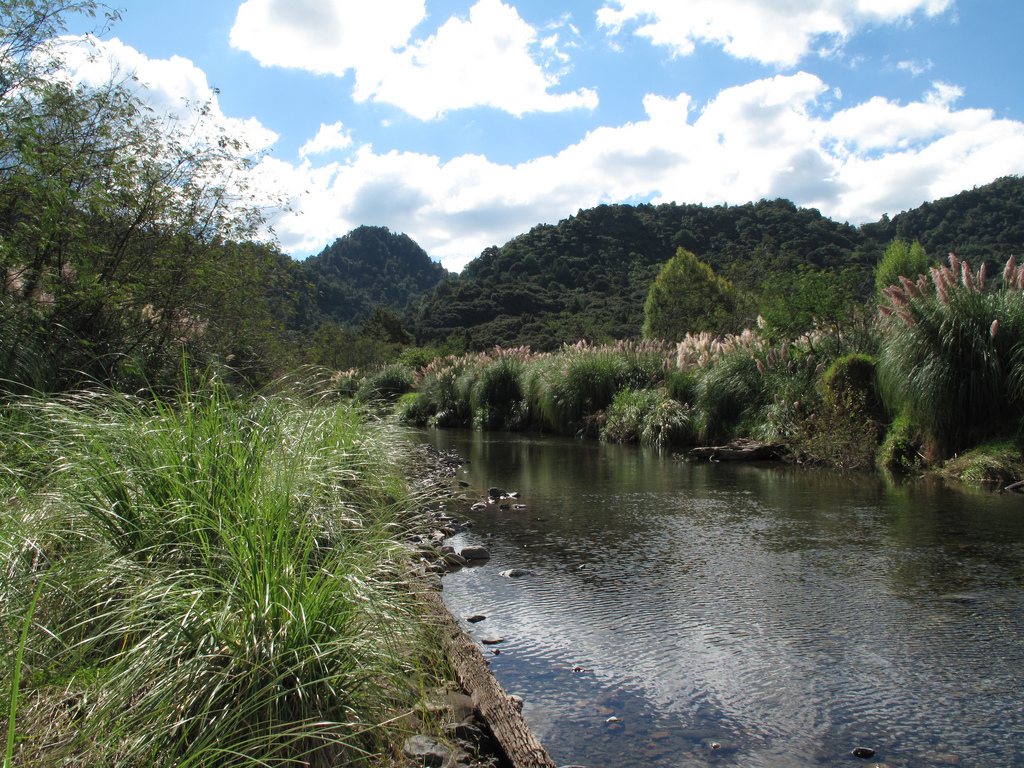
Wilderness on North Island in New Zealand,
swifant, Flickr
A mother and daughter from North Carolina who went missing for four days while hiking in a remote part of New Zealand have been found after they made "help" signs out of sticks.
Carolyn Lloyd, 45, and her 22-year-old daughter Rachel survived by huddling for warmth and rationing their limited supplies after getting lost in Tararua Forest Park near the southern tip of the country's North Island. They were discovered safe on Saturday 30 April but were airlifted to hospital, suffering from the effects of hunger and dehydration.
New Zealand authorities found the Lloyds after they made two signs and arrows pointing out their location in clearings in the forest. They were spotted by a helicopter pilot participating in the search.
On Facebook, Rachel's uncle Bob Schumacher wrote a post explaining that the pair were a "little weak" but otherwise fine. "Our prayers have been answered," he said. "My sister and niece have been found alive."
The duo, natives of Charlotte in North Carolina, were on a one-day hike on the forest's Kapakapanui track. They are believed to have got lost in a particularly challenging area of the park, and their rental car was found two days after their hotel reported them missing. As well as helicopters, authorities used dog teams and ATVs in the search.
Rachel, who was later whisked into emergency care, told Sky News that she had believed she was going to die when the helicopter appeared overhead. "At this point we kind of knew I was failing health and I was on the verge of dying," she said.
"We were even discussing going through my dying wishes which I'm sure wasn't easy for her."
Police Sgt Anthony Harmer told WSOC-TV: "One thing about the New Zealand bush is it often takes people unaware. He added: "It's a little bit steeper and little bit more rugged than a lot of tourists expect or plan for."
The two were not inexperienced hikers, having tackled the notorious Appalachian Trail in the States, and Harmer told press that "they gave themselves the best chance possible" after getting lost. The Kapakapanui trail is known to be quite steep and deceptively difficult in parts, he said, adding: "There are a couple of places where people can make mistakes and end up off the track."

A Chinese nationality priest, believed to be helping North Korean defectors, was found dead Saturday, raising speculation that Pyongyang might have been involved in killing him. This photo shows Chinese and North Korean flags attached to a railing near the Sino-Korean Friendship Bridge at the Chinese border town of Dandong, Dec.18, 2013.
Photo: Getty Images/AFP/Mark Ralston
An ethnic Korean clergyman with Chinese nationality was found dead in a northeastern Chinese town close to the North Korean border, a report by Yonhap said. The man was known to have supported North Korean defectors and his death has raised the question: was he murdered by North Korea?
The priest, identified only by his surname Han, was found dead Saturday, Yonhap reported, citing a North Korean watcher. Police officials in China have opened an investigation into his death. Han served at the Changbai Church in Changbai County, Jilin Province, which has a high population of Chaoxian people — ethnic Koreans living in China.
“Han had been active in supporting North Korean defectors,” the unidentified watcher said, according to Yonhap, adding: “Murder seems the most likely cause of his death.” However, the source denied having any concrete information linking North Korea to the death.
In April, 13 North Koreans working at a restaurant in China defected to South Korea, causing the already-tense relationship between the neighbors to become pricklier. Pyongyang claims that Seoul lured and abducted the workers, and demanded they be sent back immediately.
“We sternly denounce the group abduction of the citizens of the DPRK [Democratic People's Republic of Korea] as a hideous crime against its dignity and social system and the life and security of its citizens,” a statement, released early April by North Korea, said, adding: “The recent case of ‘group defection’ cooked up by the puppet group is a crucial provocation against the DPRK which can never be tolerated as it is an unbearable insult to the people of the DPRK.”
A report Tuesday also said that North Korea was ramping up security at its borders and was cracking down on the use of cell phones near the border in an effort to curb defections. The report added that Pyongyang increased the amount of barbed wire on the fences, set up surveillance cameras and planted mines along part of the Tumen River, which separates China and North Korea.
The Kim Jong Un regime has been accused by United Nations and other international organizations of conducting human rights abuses in the country, which are said to be a major cause for defections. A Yonhap report last month said about 29,000 people had defected to South Korea by the end of March 2016, and that the number was expected to cross 30,000 soon.
However, Pyongyang has denied the accusations of human rights abuses and condemned the reports by organizations critical of the regime.

Iraqi people and security members inspect the area after a suicide bomber blew himself up near a market place in the al Jadeed district of Baghdad, April 25, 2016.
Photo: Amir Saadi/Anadolu Agency/Getty Images
A suicide bomber driving a car killed at least 19 people and wounded 48 others on Saturday in an attack claimed by Islamic State on a group of Shi'ite Muslim pilgrims in a southeastern suburb of Baghdad, Iraqi police sources said.
A second explosion near a Shi'ite militia checkpoint in the capital's Dora district killed two and wounded three others, police sources said. There was no immediate claim of responsibility for that blast.
Amaq news agency, which supports Islamic State, said a fighter in the Nahrawan district had driven a truck loaded with three tonnes of explosives into the gathering of Shi'ite pilgrims. They had been heading to Baghdad's Imam Kadhim shrine to commemorate the 8th century death of one of Shi'ite Islam's senior figures.
Security has gradually improved in Baghdad, which was the target of daily bombings a decade ago, but attacks against both the security forces and civilians are still frequent.
The rise of Islamic State, which is fighting government forces for control of swathes of northern and western Iraq, has exacerbated the country's sectarian conflict, mostly between Shi'ites and Sunnis, which emerged after the 2003 U.S.-led invasion.
Also on Saturday Islamic State militants launched an offensive near the northern town of Baiji, which Iraqi forces and Shi'ite militia fighters recaptured months ago along with a large oil refinery devastated by the conflict.
In the first set of attacks on Friday evening near Siniya west of Baiji, Islamic State seized four security checkpoints, according to sources in Salahuddin operations command. The militants used car bombs, killing 11 members of the security forces and wounding 12 others.
From the eastern side of Baiji, the militants attacked security forces near Makhoul, killing three police officers and wounding two others in fighting that continued on Saturday, the sources said.

  • A boy looks at a dead fish on a beach in Quang Trach district in the central coastal province of Quang Binh, Vietnam, April 20, 2016. Critics say Taiwanese conglomerate Formosa Plastics may be to blame for the problem.
    Photo: STR/AFP/Getty Images
  • This picture taken on April 20, 2016 shows a man walking among dead fish lying on a beach in Quang Trach district in Vietnam’s central coastal province of Quang Binh.
    Photo: STR/AFP/Getty Images
Previous
Next
Outraged citizens in Vietnam and across social media are still seeking answers and demanding action as large numbers fish turn up dead along extensive stretches of the country’s central coastline, putting fisherman out of work and leading to a ban on seafood sales in the region.
The cause of the environmental disaster is still unknown, but many in the country have been pointing to a steel plant owned by a subsidiary of the Taiwanese conglomerate Formosa Plastics Corporation. The facility is located in the Vung Ang Industrial Zone and connected to a mile-long water pipeline, which is thought to be the source of industrial contaminants.
Earlier last week, the Vietnamese government said there was no evidence that the plant was responsible for the fish deaths, as Reuters reported, instead pointing to a toxic overproduction of algae, a phenomenon known as “red tide.” But that explanation did not satisfy critics who said the government has been slow to respond to the crisis and lacks any semblance of transparency or accountability.
Activists in the Tran Hong Ha province protested Formosa Plastics last week by piling up dead fish along the national highway, according to social media postings cited by Radio Free Asia.
On Friday, Vietnam’s minister of environment and natural resources, Tran Hong Ha, apologized for the government’s “confused” response to the crisis and told reporters that he’d had discussions with Formosa management, RFA reported. He went on to say it now appears as if the waste pipeline is not being installed properly and he requested monitoring of the situation.
Representatives of Formosa Plastics did not immediately respond to a request for comment.
The situation is reportedly having a devastating effect on local fishing communities, with the country’s director of fisheries estimating losses of $200,000 in just one week, according to the Asia-Pacific news website the Diplomat. The deaths are said to include not just shallow-water fish but also rare species. As of last week, more than 40 tons of dead fish have turned up along Vietnam’s central provinces, the news agency VnExpress reported.
On Thursday, the Vietnamese government banned the sale and distribution of seafood from affected areas.
Meanwhile, calls for action and accountability are spreading feverishly across social media, including in the United States, where more than 17,000 people have signed a White House petition asking the U.S. government to investigate the cause of the fish deaths. Another petition, on Change.org, is asking the famed environmental crusader Erin Brockovich to lead activists in a class action lawsuit against Formosa.
Elsewhere on social media, some commentators said they hoped the global outcry could spur needed changes in a country known for a lack of transparency. “This is an unmitigated environmental catastrophe,” one Facebook user, identified as a student at the University of Economics, Ho Chi Minh City, posted. “I wouldn't be surprised if it brings about some kind of change in VN government accountability, if not revolution.”
Christopher Zara covers media and culture. News tips? Email me. Follow me on Twitter @christopherzara

The building came down following some of the heaviest downpours since the start of the rainy season that caused flooding and landslides in many areas of the city.

NAIROBI: At least 12 people died when a building collapsed in Nairobi, officials said on Saturday (Apr 30), as rescuers scrambled to find more survivors after torrential storms which killed another seven people.
President Uhuru Kenyatta visited the ruins of the six-storey building, where residents perished after concrete floors collapsed down on top of each other during heavy rainstorms on Friday.
The two-year-old building, home to more than 150 families, had been condemned by building authorities but the order to evacuate it had been ignored. "So far 12 people have been confirmed dead from the ... tragedy," a government statement said.
The building came down at around 9.30pm (1830 GMT) Friday following some of the heaviest downpours since the start of the rainy season that caused flooding and landslides in many areas of the city.
Two neighbouring buildings were declared unsafe and were evacuated. Seven other people died in floods elsewhere in the Kenyan capital, including four killed when a wall collapsed.
MISSING
Kenya Red Cross said that over 50 people had been reported as missing. However, there was no confirmation that they were trapped inside the building.
Heavy rainstorms are predicted to continue overnight, the Red Cross saying rescue efforts were expected to continue, "probably running into days."
Access for rescuers with larger machinery has been made difficult by the narrow and crowded streets.
One survivor was pulled from the huge pile of debris shortly after dawn, Kenya Red Cross said, some 10 hours after the building collapsed Friday night.
'IGNORED DIRECTIVES'
Pictures broadcast by local media showed soldiers, policemen and civilians searching through the rubble.
Kenyatta "braved the rainy and chilly weather" to visit the poor and densely-populated Huruma neighbourhood, a statement from the presidency said.
He ordered police to "take immediate action to identify and arrest owners of buildings who have ignored directives by the National Construction Authority", it said.
In other separate incidents, two people drowned when their vehicle was swept away by storm waters in the capital's Industrial Area, and another person died in floods.
Nairobi has been in the midst of a building boom for some years but the quality of materials used and speed of construction have sometimes been called into question.
The growing middle class has triggered an explosion in demand for housing and a rise in real estate prices in the east African capital.

Elsa Buchanan
A supporter of elected President Denis Sassou Nguesso waits at a sports field ahead of a party organised to celebrate his re-election in Brazzaville on March 24, 2016
EDUARDO SOTERAS/AFP/Getty Images
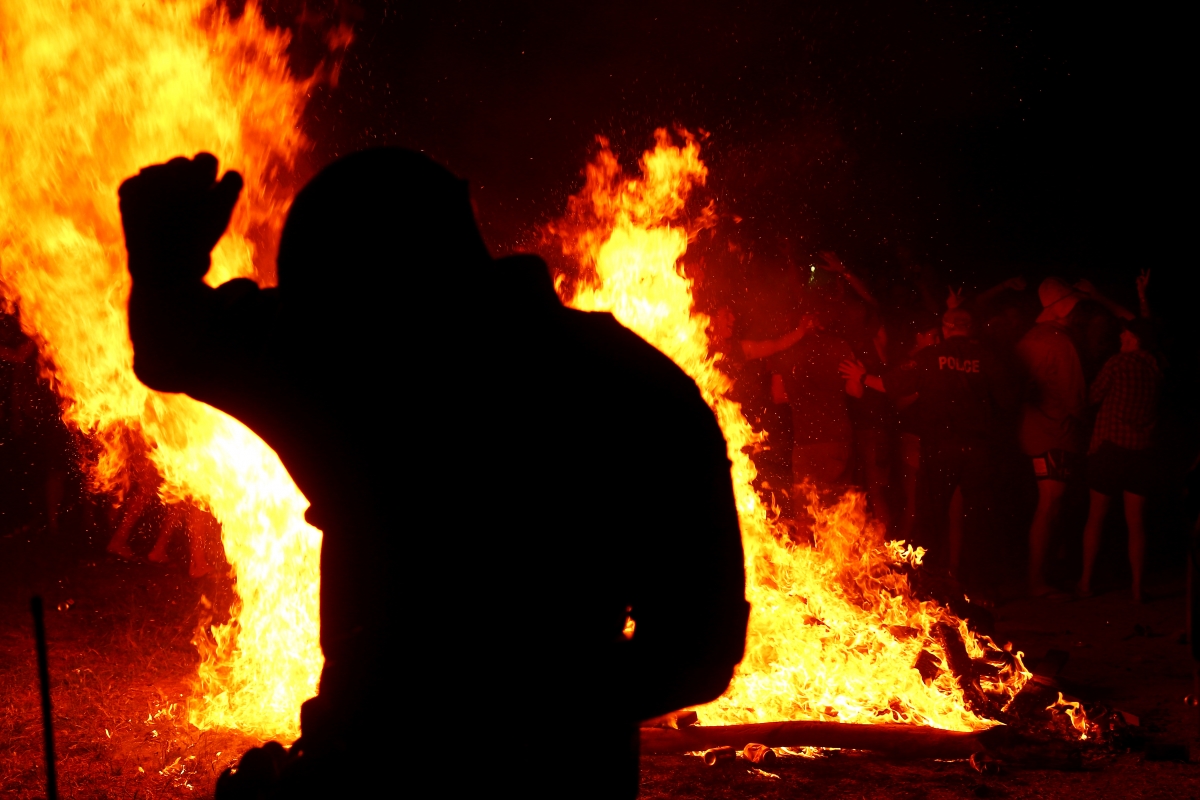
The town of Madingou in the Republic of the Congo, also known as Congo-Brazzaville, recently became the frontlines of confrontations between security forces and protesters who set a police station ablaze in anger over the death of a teenager.
Tensions had been running high in the Central African nation, where simmering anger against President Denis Sassou Nguesso's re-election seems to be boiling over, at times inflamed by powerful propaganda campaigns masterminded by Sassou Nguesso's Congolese Party of Labour (PCT) and the opposition.
Confrontations in Madingou, capital city of the southern Bouenza Region, followed the death of 13-year-old Japhet Nguembo, who was allegedly shot by a security officer near the town's station on 26 April. According to local sources, the teenager later died from his injuries.
What happened next has been the subject of much speculation, misinformation and fiction. There were reports the army had 'arrested and killed youths' following the arson. Others stated that the President's militia had been deployed to the town. Local media also reported government helicopters had bombarded the area.

'Surprised' to read reports of widespread violence

However, IBTimes UK spoke to a number of trusted sources, who confirmed there had been no violent activity besides the fact the policeman shot at the teenager, and the arson.
"I saw the body of the little one who was shot. The bullet entered the femur and came out of the penis area," a Madingou resident, Eudes (not real name), said over the phone.
"After the officer shot, people went towards the police station and set fire to the commissioner's office. The local authorities informed the parents after army officers arrested the policeman. After that, things quietened down."
The young man said he was "surprised" to read reports of widespread violence. "The same day after the police station was set ablaze, people continued to go to the local market (situated near the police station), people continued to go about their business. The military did not intervene, and there certainly was no bombardments, unlike what media reports stated."

'No threat against any one', says resident

Another male source, an acquittance of the victim's father who wished to remain anonymous, dismissed claims that youths had called for "vengeance" against the authorities. "I have been to the vigil every night and it is calm. No military officers have been dispatched to the area, it is just as usual, parents get together during the vigil, sing religious songs. No threat against anyone."
A number of commentators had warned the teenager's death may be used for political point-scoring by the opposition, who have accused the government of targeted killings, with an ex-government minister, Claudine Munari, describing the confirmed bombing of the department of Pool as "genocide". However, other observers said the incident was not politically-motivated.
"This is purely media propaganda. I have friends who called me after they read the reports that our town, Madingo, had been bombarded. They asked me where I had fled and hidden. I used FaceTime (a video calling service on mobile phones) to show them there was nothing," the source said.
Residents firmly condemned Nguembo's death.

Afrogalaxy

Contact Form

Name

Email *

Message *

Powered by Blogger.
Javascript DisablePlease Enable Javascript To See All Widget