Articles by "Finance"

Kedar Grandhi
The allegations were made by Philippe Hébert, chief risk officer at Barclays France
Reuters
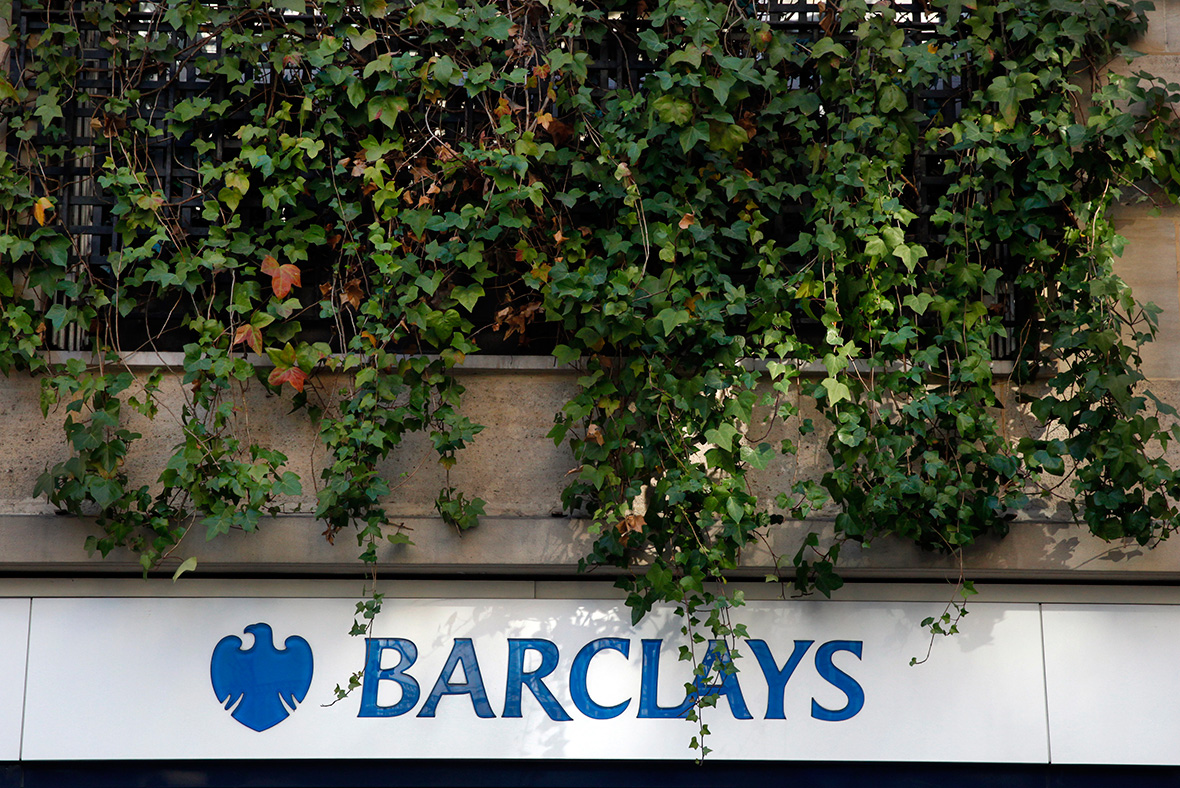
Philippe Hébert, chief risk officer at Barclays France, has alleged that the British bank's French operations are involved in money laundering and mis-selling.
Barclays France is also alleged to have had serious shortcomings with regards to its conduct, compliance and control standards.
This was exposed in a letter dated 5 April from Hébert to Tony Blanco, chief executive of Barclays France. Hébert had said: "I am following up the message I sent you on March 3, regarding serious mismanagement at cashier level and the particularly poor handling of this situation by the various control services and lines of defence, even though it carries serious risks of money laundering, especially at branches already known to be at risk (such as Biarritz)."
According to the Financial Times, the letter cited several cases of suspicious activity in the French arm. One such activity that was pointed out was large cash withdrawals by one client on 38 occasions. The withdrawn amount was just short of the €10,000 (£7,858, $11,553) limit and was done at the bank's Biarritz branch. Another activity cited was the detention of its Nantes branch staff by police as they were suspected to be involved in money laundering. Hébert claimed in the letter the bank had not taken these activities seriously enough.
On the mis-selling front, Hébert claimed Barclays France mis-sold expensive products on a regular basis. He cited the example of a 97-year-old man who was advised to invest his entire money into one of its Spirimmo life insurance products, which came with a 6% annual charge. While the man's son later complained of the same and was paid €60,000 as settlement, Hébert said the bank had failed to take any disciplinary action against the staff responsible.
These allegations come at a time when Barclays was in talks AnaCap Financial Partners, a UK-based private equity investor, with regards to the sale of its French retail, wealth management and life insurance business. While it is unsure if this deal will now go through, sources said AnaCap has been made aware of the letter and the allegations following which the PE firm continued to pursue talks to seal the deal. AnaCap has, however, declined to comment.
With regards to these allegations, Barclays said: "We were already aware of these allegations. We are satisfied that the concerns were already identified and under investigation and action being taken in accordance with our standard processes. All relevant parties are aware."

Japanese 10,000 yen notes line up in Tokyo, in this Feb. 28, 2013, picture illustration.
Photo: REUTERS/SHOHEI MIYANO
The yen touched a fresh 18-month high against the greenback early on Monday as its biggest weekly gain in over seven years tested the patience of Japanese officials concerned the rally will damage exports and the share market.
Finance Minister Taro Aso was quoted in Japanese media over the weekend as being unhappy with the yen's strength, saying it was extremely concerning.
The dollar fell as far as 106.14 yen, breaking through Friday's trough of 106.27. It slumped nearly 5 percent last week — a percentage fall not seen since 2008 — after the Bank of Japan refrained from adding fresh stimulus.
The euro was steadier at 122.00 yen, but still within a whisker of a three-year trough around 121.66 set last Friday.
"In our view, it will be difficult for the BoJ to justify intervening the foreign exchange market to weaken JPY especially after the U.S. Treasury placed Japan on a new FX ‘monitoring list,’ ” said Elias Haddad, strategist at Commonwealth Bank of Australia.
"But even if the BoJ intervenes to weaken JPY, USD/JPY is unlikely to sustain a move higher because of Japan's large current account surplus."
In a report to Congress, the U.S. Treasury Department said it is creating a new "Monitoring List" that includes China, Japan, Korea, Taiwan and Germany, to closely watch and assess the economic trends and foreign exchange policies of these economies.
It noted that "current conditions in the dollar-yen foreign exchange market are orderly," perhaps a hint to Japanese officials not to intervene to weaken the yen.
There was little reaction to a survey on China's manufacturing sector released on Sunday.
The report showed activity expanded for the second month in a row in April but only marginally, raising doubts about the sustainability of a recent pickup in the world's second-largest economy.
The Australian dollar, often used as a liquid proxy for China plays, edged up to $0.7615, from $0.7603 late on Friday.
All eyes are on an interest rate decision by the Reserve Bank of Australia (RBA) on Tuesday.
While a majority of economists polled by Reuters expect no rate move, a growing number are calling for a cut following a batch of disturbingly soft inflation numbers.
Much of Asia is closed for the May Labor Day holiday on Monday and Japanese financial markets will be shut from Tuesday to Thursday for the Golden Week holiday.

Bank of Korea Governor Lee Ju-yeol speaks during a news conference at Seoul Foreign Correspondents Club, Jan. 22, 2015.
Photo: REUTERS/KIM HONG-JI
South Korea's central bank governor threw the full weight of the bank behind a structural reform effort on Monday, but did not mention whether the bank would be engaging in quantitative easing, which it is under pressure to provide.
The governor's comments followed a day after Finance Minister Yoo Il-ho said in a television interview that policymakers were contemplating the best strategy to support two state-run policy banks involved in a massive overhaul of South Korea's shipping and shipbuilding industries.
"We should be extremely wary of the possibility of any temporary effects like negative influences on financial markets or a worsening of corporate liquidity," Bank of Korea Governor Lee Ju-yeol told his top officials before leaving for the annual meeting of the Asian Development Bank.
Lee added corporate structural reform was "very important" for Asia's fourth-largest economy.
South Korean President Park Geun-hye has said allowing the Bank of Korea to undertake some form of quantitative easing should be considered to ensure credit goes where it is needed during the structural reform process.
Park has said the quantitative easing mix being considered was not of the kind that has been seen in advanced economies such as the U.S., Japan or the European Union.
"We are thinking of a mix of fiscal and monetary policy rather than just one," Yoo said on Sunday.
When asked whether quantitative easing being undertaken by the central bank was possible, Yoo added that it too was a candidate for inclusion in the policy mix.
Last Friday, the central bank's labor union criticized calls for quantitative easing, saying it could harm the central bank's independence and the union would protest against it for as long as possible.
"What the government is calling for is not quantitative easing. They are crying out wine and selling vinegar," the union said in a statement.
A task force of officials from the government, central bank and other related bodies, will hold its first meeting later this week — chaired by the first vice finance minister.

The yen surged about three per cent against the dollar on Thursday after the Bank of Japan left markets in shock by failing to deliver more stimulus for the struggling Japanese economy.
NEW YORK: The yen surged about three per cent against the dollar on Thursday (Apr 28) after the Bank of Japan left markets in shock by failing to deliver more stimulus for the struggling Japanese economy.
Traders had widely expected the central bank to unveil fresh measures to shore up the world's number-three economy after this month's deadly earthquakes in southern Japan and a series of weak data.
But, after a two-day meeting, the BoJ announced it would stand pat, saying it wanted to gauge the effects of the negative interest rate policy introduced in January.
"The main takeaway from the BoJ meeting is the Japanese feel no immediate pressure to use monetary policy or currency intervention to turn around the economy," said Kathy Lien of BK Asset Management.
"They feel like they've done enough for the time being and want to see how the economy reacts first."
At 2100 GMT Thursday, the dollar bought 108.11 yen, down from 111.47 at the same time Wednesday.
The greenback ended the day lower against its major rivals after the US government reported first-quarter economic growth slowed to a paltry 0.5 per cent annual rate from 1.4 per cent in the fourth quarter.
Analysts had expected a better 0.9 per cent. The data came a day after the Federal Reserve left ultra-low interest rates unchanged citing the slowing economy.
"While a weak quarter was largely expected ... the data will continue to keep the outlook for the next rate hike by the Fed very clouded," said Omer Esiner of Commonwealth Foreign Exchange.

The Japanese yen was trading at 111.30 against the U.S. dollar Tuesday, up from its lowest closing of the year on April 11, as investors bet on loose Japanese monetary policy for the year. Pictured: An employee counts Japanese yen notes at a store in Tokyo, Jan. 1, 2016.
Photo: Tomohiro Ohsumi/Getty Images
The Japanese yen has been weakening against the U.S. dollar this week ahead of a key policy announcement from the Bank of Japan. Investors and analysts alike believe the central bank will announce further stimulus measures and leave the door open to further loosening of monetary policy later this year.
Japan’s central bank pushed borrowing rates down into negative territory in January, joining its counterparts in the European Union, Switzerland and Sweden in an aggressive bid to discourage banks from sitting on money.
Currently the Bank of Japan and the U.S. Federal Reserve are moving in opposite directions. The U.S. is cautiously working to push up borrowing rates, but a global slowdown and tepid U.S. inflation are hampering these efforts. Meanwhile, the U.S. dollar and the Japanese yen have been strengthening amid uncertainties that have pushed investors into these “safe haven” currencies. Japan has been trying to drive the yen down in order to make its exports cheaper and strengthen corporate profits earned abroad.
The yen has weakened 3 percent against the dollar since closing at its lowest level since late October earlier this month. The short-lived surge came as companies repatriated overseas profits at the start of the country’s fiscal year.
But last week the Bank of Japan said it was considering further cuts to the rate it charges banks for borrowing. Since then, currency traders began betting more firmly on further stimulus measures, which most believe will be announced at the end of the Bank of Japan’s two-day policy meeting that starts Wednesday. The yen closed at 111.3 against the dollar Tuesday, down in value from a close of 107.9 on April 11. Analysts at UBS expect the yen to end the year at 122 unless the Bank of Japan tightens economic stimulus this year.
“We expect the BoJ to loosen policy further on Thursday – probably via an expansion in the rate of its asset purchases as well as a cut in the interest rate on excess reserves,” Alex Holmes, assistant economist at U.K.-based Capital Economics, said in a note Tuesday addressing the effects of U.S. and Japanese monetary policy decisions this week. “We also think the BoJ will maintain a bias towards easing and loosen course of the coming year.”
Fed Chair Janet Yellen is widely expected to keep current policy steady, hesitant to continue the course started in December toward normalizing interest rates. Concern over global economic growth and persistently lower-than-ideal U.S. inflation is keeping the Fed cautious, but the possibly of another rate hike in June is still in play. While the Fed remains cautious on tightening policy, the Bank of Japan holds a bias towards easing.
That means the BoJ is expected expand asset purchases from banks, which introduces more currency into the economy, and dive further into negative interest-rate territory, charging banks for holding deposits to encourage them to lend. The bank could also begin implementing negative rates on lending money to banks, too, according to UBS in a note Tuesday.
Between the U.S. Fed’s cautious rate policy and the Bank of Japan’s aggressive stimulus, the yen is expected to weaken further this year, analysts say, a move that would benefit Japanese companies because it makes their exports more affordable in foreign currencies, including the dollar, whose strength has battered U.S. corporate earnings for much of the past year.

Ant Financial, which runs Alipay, has raised $4.5 billion in private equity funding. Here, a sales assistant sits behind and under Alipay logos at a train station in Shanghai, Feb. 9, 2015.
Photo: REUTERS/Aly Song
Zhejiang Ant Small & Micro Financial Services Group (Ant Financial), the online financial affiliate of Chinese e-commerce giant Alibaba Group, announced Tuesday it had secured funding worth a whopping $4.5 billion in what is the world’s largest single private equity funding round for any internet business to date, even as billion dollar funding rounds are not entirely uncommon any more.
The current round of funding is estimated to value the company, which has over 450 million active users, at about $60 billion, up from its estimated valuation of $45 billion during its previous round of funding last year.
Existing shareholders such as China Post Group, private-equity firm Primavera Capital Group and China Development Bank Capital contributed to the series B funding. New investors included sovereign wealth fund China Investment Corp.’s CIC Capital and a subsidiary of state-owned China Construction Bank Corp.
In a statement, Ant Financial said: “This new round of funding will support Ant Financial in its goal to expand access to financial services in China’s rural areas, while also fuelling the company’s globalization.”
Ant Financial, previously known as Alipay, was split off from Alibaba prior to the latter’s record listing on the New York Stock Exchange in September 2014. A Wall Street Journal report said the company is considering its own initial public offerings in both domestic and offshore stock exchanges, even though it hasn’t specified a timeline for doing so.
Ant Financial operates China’s biggest online payments platform, Alipay, and also controls China’s largest online money-market fund Yu’e Bao, as well as an online bank, MYBank, launched in 2015. According to Bloomberg, the micro-lending business of Ant Financial handled about 30 billion yuan ($4.62 billion) in loans in January this year.
While focused mainly on China, the company has expanded overseas as well, most notably investing in Indian mobile payments app, Paytm, which claims to have over 120 million users.
Before this round of funding for Ant Financial, the previous largest private equity funding was for another Chinese company, Meituan-Dianping, an online seller of movie tickets and restaurant bookings, which raised $3.3 billion in January.

  • Boston Mayor Kevin White points to a chart describing the effects of rising inflation, in Boston, Sept. 25, 1978.
    Photo: Barbara Alper/Getty Images
  • If the dollar continues to fall throughout 2016, inflation may hit the Federal Reserve's preferred target sooner than expected.
    Photo: REUTERS/Jo Yong-Hak
Previous
Next
The steady weakening of the U.S. dollar against other major world currencies could push inflation up faster than investors have expected, providing the Federal Reserve additional justification to raise interest rates in the months ahead.
That’s the conclusion of analysts at Bank of America Merrill Lynch, who examined the impact of currency prices on domestic inflation. If correct, the analysis would vindicate Fed Chair Janet Yellen, whose repeated assertion that the forces holding back inflation are merely “transitory” has been challenged by skeptics.
The question, however, is just how much the strengthening of the dollar against a basket of other world currencies affected prices of goods in the U.S. When the dollar gains strength — as it did throughout 2015 amid mounting fears over the course of global growth — goods from abroad become effectively cheaper, putting a drag on U.S. inflation. But those effects aren’t felt evenly throughout the economy.
Breaking apart the various sectors that make up core personal consumption expenditures (PCE), the Fed’s preferred inflation measure, Bank of America isolated those goods that have a high import content and close correlation with the dollar, including jewelry, motor parts and appliances. An index of just those items showed a steep increase in the past several months.

The prices of goods sensitive to changes in the dollar have risen sharply of late.
Photo: Bank of America, Haver Analytics
Overall, the analysts found that lower import costs put a 0.3 percent damper on year-over-year inflation. That might not sound like much, but 0.3 percent is a large margin relative to the Fed’s target of 2 percent annual gains in core PCE, a metric that excludes food and energy prices. In February, prices accelerated at a clip of 1.67 percent year over year.
The course of inflation over the rest of 2016 depends in part on the path the dollar takes. After appreciating nearly 10 percent over the course of 2015, the dollar has eased more than 3 percent in 2016. If Bank of America’s current projections hold, core inflation is likely to merely inch toward 2 percent over the next 18 months. But a 10 percent decline in the dollar, totally erasing last year’s gains, would push inflation back to the Fed’s target much quicker, the analysts said.
But all this depends on whether the Bank of America analysts' thesis holds — that import prices really are appreciably raising inflation. Inflation measures rose in the first two months of the year, concurrent with the easing of the dollar. Though the Fed ascribed the pop in inflation to “transitory factors,” Bank of America argued the effect on the dollar wouldn’t be so brief.

A quickened fall in the price of the dollar could push inflation up faster than expected.
Photo: Bank of America, Haver Analytics
“The shift is broad, brisk, and suggests the dollar’s disinflationary drag is fading,” the analysts wrote. In short, that means the Fed may have to take a harder look at the dollar in coming months as policymakers grapple with the decision of when to hike interest rates next.
The Fed's rate-setting committee meets again next Tuesday and Wednesday. 

Afrogalaxy

Contact Form

Name

Email *

Message *

Powered by Blogger.
Javascript DisablePlease Enable Javascript To See All Widget